

8 Exterior Wall Cladding Tiles You Might Not Know in 2025
The façade of a building is its first impression. In recent years, flexible stone veneers have surged in popularity, offering architects and designers a versatile alternative to traditional materials like ceramic tile, natural stone slabs, and aluminum panels. Unlike these conventional options—which can suffer from delamination (a serious safety hazard), high costs, and prolonged installation times—flexible stone veneers solve many common pain points by combining lightweight installation, competitive pricing, and striking aesthetics. In this article, we introduce eight innovative cladding tile types you may not yet have encountered in 2025, with in-depth specs, advantages, and installation methods for each.


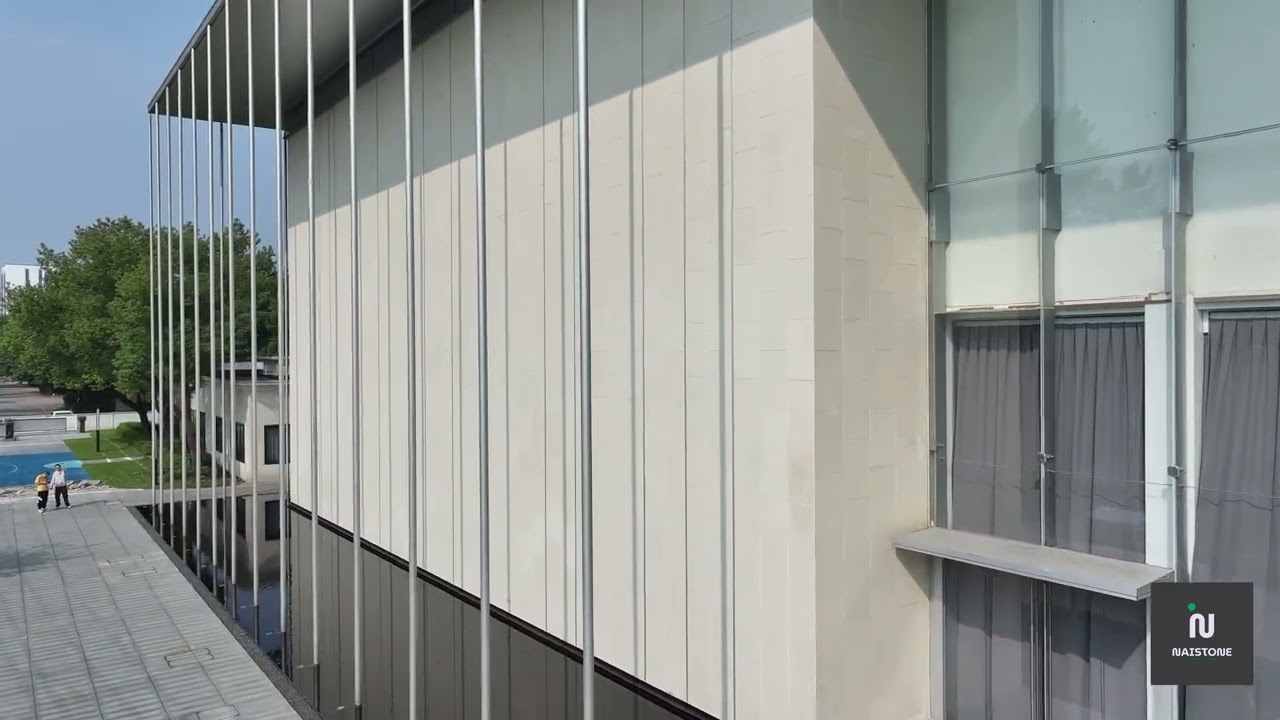
Travertine is mostly beige in color, which makes people feel gentle, rich in texture, and with clear stripes, which makes the buildings decorated have a strong cultural and historical charm. Due to the presence of a large number of holes, natural travertine has a low volume density, increased water absorption, decreased strength, and poor performance uniformity, especially the dispersion of bending strength is very large. Some will break during transportation, and it will face extremely high risks when used on exterior walls. The travertine-style patch stone developed by NAI STONE has rich colors, unique textures, and a special hole structure with a well-proportioned density and harmonious concave and convex. It exhibits good decorative performance and excellent safety, making it suitable for application to exterior walls over a large area.
Advantages
- Authentic rusticated pores and veining preserved in a 2.7 ± 0.5 mm-thin sheet
- Weight: ~4 kg/m²—dramatically lighter than traditional slabs
- Bendable to a minimum radius of 200 mm, perfect for arches and columns
- Advanced resin backing and adhesive system deliver > 800 kPa pull-off strength
Standard Sizes
- 600 × 900 mm
- Optional: 600 × 1200 mm
Application Method
- Clean and prime substrate with alkali-resistant interface agent.
- Apply non-cement adhesive mortar in a uniform buttering-and-back-buttering technique.
- Press veneer sheet into place, tapping gently with a rubber mallet for full contact.
- Trim edges with a utility knife; seal joints with EVA sealing strip and compatible sealant.
Projects Showcase


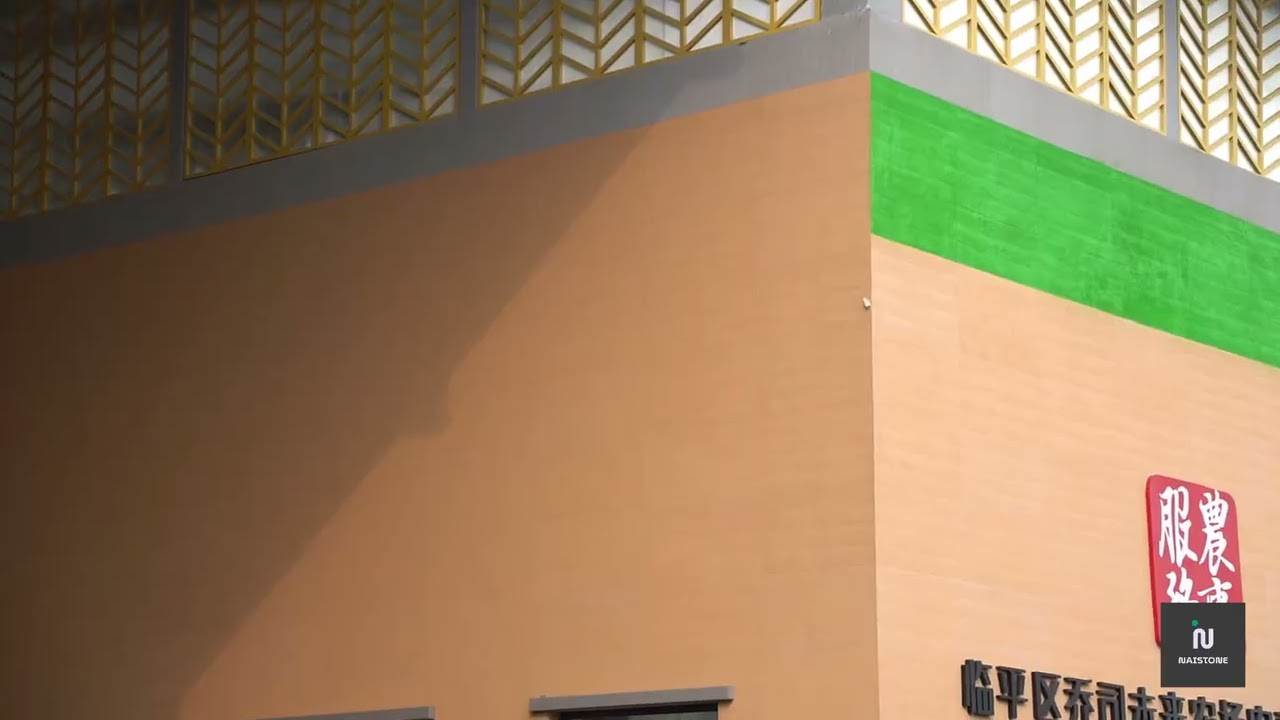
Rammed earth, a material used in ancient Chinese architecture, is made of red mud, coarse sand and lime in a certain proportion. Heavy objects are used to tamp this “three-in-one soil” to remove the gaps in it, so that real rammed earth can be obtained. The color of the imitation rammed earth flexible stone produced by NAI STONE is reflected by stone powder quartz sand, does not contain any color paste, is durable and does not fade; it is easy to construct, no tamping or spraying is required, and the sheet-shaped finished rammed earth sheets are directly pasted on the rammed earth; it is flexible and waterproof, and the curved rammed earth and columns can be easily decorated, creating an environmentaly friendly, simple, natural, and secluded rural architectural style for you
Advantages
- Up to 80% recycled content, zero VOC binders
- Thermal-mass buffering reduces HVAC loads
- Rustic horizontal banding evokes earthen architecture
- Built-in mildew- and algae-resistant agents
Standard Sizes
- 60 × 300 mm “brick” modules
- 600 × 1200 mm large panels
Application
- Similar to travertine veneer: interface treatment, adhesive, sheet press, and seam sealing.
- Curved columns and corners require 3 mm minimum gap, finished with sealant.
Projects Showcase


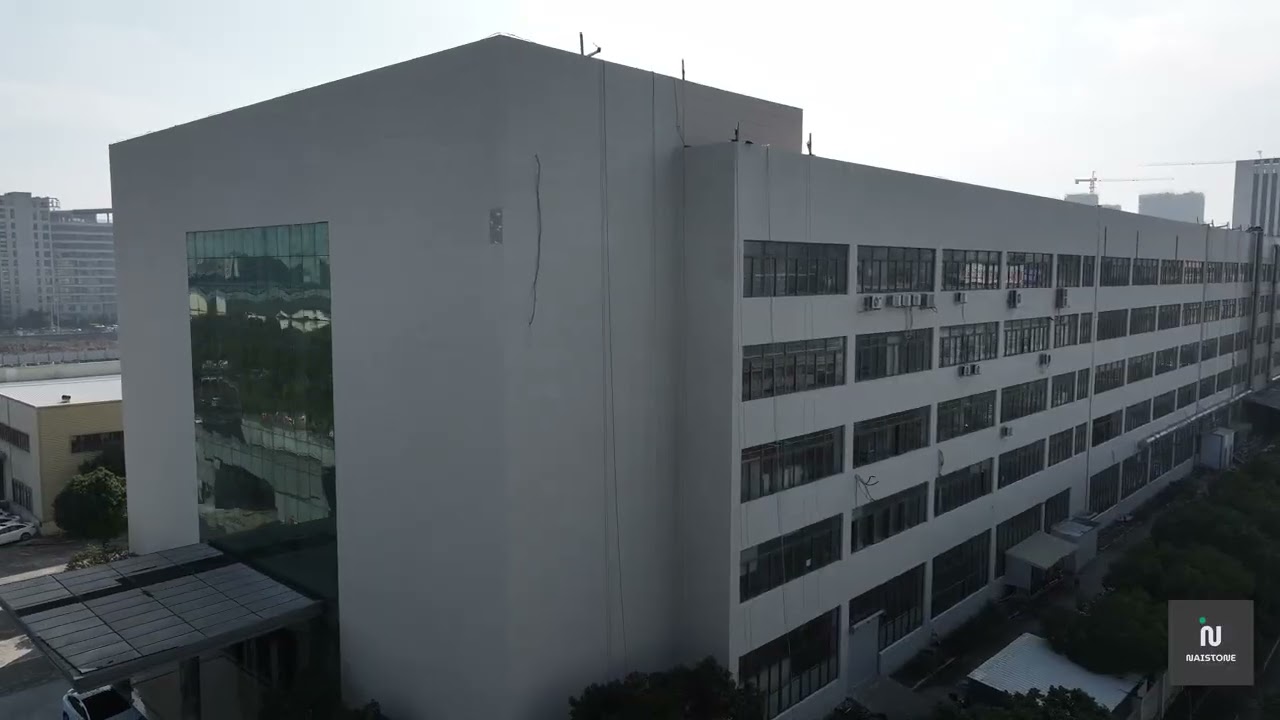
Granite is a high-grade finishing material, which is widely favored by people because of its hard and durable texture, colorful and diverse patterns, and good decorative effect. However, due to its high cost, it is mostly used in public buildings and projects with high decorative grade requirements. The granite-style flexstone developed by NAI STONE has a dense structure, bright colors, acid resistance, alkali resistance, corrosion resistance, strong tensile and pressure resistance, low water absorption, and can achieve the performance of high-quality natural granite, while greatly reducing costs, with the advantage of high cost performance.
Advantages
NAI STONE’s Granite Series mimics high-grade quartz-sand-bonded granite while slashing cost to 25% of natural stone.
- Dense microstructure, vivid color retention
- Acid-, alkali-, and corrosion-resistant; UV-stable
- Compressive strength and abrasion resistance on par with premium granite
- Water absorption ≤ 4.7% (GB/T 9966.3-2020); fire rating A2
Physical Specs
- Thickness: 2.7 ± 0.5 mm
- Weight: ~4 kg/m²
- Bending radius: ≥ 200 mm
- Pull-off strength: > 800 kPa (national standard ≥ 600 kPa)
Finishes & Sizes
- Smooth (SG), Litchi (RG), Flamed (FG)
- Standard: 600 × 900 mm; Flamed also in 600 × 1200 mm
- Over 20 color patterns (FG-101…FG-128)
Application Method
- Substrate Prep: Remove loose coatings, level unevenness > 2 mm.
- Interface Treatment: Roll on alkali-resistant primer.
- Adhesive: Use non-cement adhesive mortar in full-coverage back-butter.
- Installation: Press sheets into position; check alignment with laser level.
- Seams & Corners: Maintain 3–5 mm gap; insert EVA strip and sealant.
- Tools: Serrated scraper, plastic trowel, cutting knife, plumb bob, ruler.
Projects Showcase


The unique texture of wood has a strong decorative feel and is widely loved by people. It is very fashionable to use wood grain to decorate the wall, but natural wood is easy to rot and deform. The wood grain style flexible stone produced by NAI STONE not only retains the natural flavor of wood grain, but also has the durability of stone.
Advantages
- Digitally printed natural wood textures on real-stone substrate
- Insect- and rot-proof; fire rating A2
- Consistent expansion behavior; no warping in high humidity
Sizes & Application
- Planks: 590 × 900 mm
- Installed identically to granite veneer; may be oriented horizontally or vertically.
Projects Showcase


Advantages
- 3 mm-thin quarried stone reliefs bonded to fibreglass mesh
- Dramatic light-and-shadow play in cube, hexagon, pyramid motifs
- Lightweight, rapid peel-and-stick or mechanical-anchor installation
Sizes
- Module standard: 600 × 900 mm or bespoke repeats on request
Projects Showcase


Advantages
- CNC-routed channels as narrow as 2 mm cut into a 2.7 mm stone slice
- Sleek minimalist accents; integrates low-profile LED strip channels
- High UV and weathering resistance (2000 h cycle, ΔE ≤ 2)
Projects


Sandstone veneer has a rough texture, rich colors, and natural shapes, which is consistent with people’s cultural concept of advocating nature. It can be said that slate is a reflection of people’s mentality of returning to nature, and returning to nature in indoor and outdoor decoration. We can also understand this mentality as a kind of living culture. Sandstone is generally suitable for high-end buildings such as bars, villas, and restaurants. The walls decorated with this stone can reveal a cultural charm and natural atmosphere.
Advantages
- Authentic granulometric texture; anti-mildew additives
- Breathable matrix reduces moisture buildup
- Available in solid, textured, and Australian sandstone patterns
Standard Sizes
- 600 × 900 mm
Projects


8. Cut-to-Size Custom Veneer
Advantages
- Fabricated to your exact shapes—slivers, polygons, free-form
- Minimises on-site waste and cutting labour
- Combines multiple stone types seamlessly in one façade
Projects
Why Flexible Stone Veneer?
- Lightweight & Thin: ~4 kg/m²; 2.7 mm thickness
- Flexible & Safe: Bendable around curves; > 800 kPa adhesion prevents sudden detachment
- Durable: 20–30 year lifespan; high crack, stain, salt spray, and fire resistance
- Eco-Friendly: Natural quartz sand and stone powder; zero VOCs; dust-free installation
- Fast & Cost-Effective: One-third the installation time of slab or tile; material cost ≤ 25% of natural stone
Whether you’re specifying a high-rise curtain wall, a boutique storefront, or a heritage renovation, these eight flexible cladding tiles blend natural elegance with modern performance. Reach out to your supplier for samples, installation training, and project-specific engineering details to make your next façade project safe, beautiful, and on schedule.
Waterproof | Fireproof | Cleaning Tests
Enjoyed our deep dive into the latest exterior wall cladding innovations? Share this post on your favorite social channels and inspire your network! Don’t forget to tag us and use #FlexibleStoneVeneer #FacadeDesign to join the conversation. Your share helps architects and designers everywhere discover smarter, safer, and more beautiful building solutions!
